

StraViso – Maximizing Field Productivity In Merger Integrations and Fiber Rollouts
Field Productivity · Merger Integration · Fiber Rollouts

Maximizing Field Productivity In Merger Integrations and Fiber Rollouts

StraViso gives field teams the productivity layer they need now, with impact in 60 days and a 9-month path to scale, without rip-and-replace.

20%–35% more productivity. 15%–40% fewer dispatch calls.

StraViso gives field teams the productivity layer they need now, with impact in 60 days and a 9-month path to scale, without rip-and-replace.

2+ Legacy dispatch environments running parallel
18+ Months Before FSM consolidation typically reaches field operations
4 Workforce environments operating without one shared coordination layer
4–5 vs 6–7 Jobs per tech per day: current vs achievable

Additive Pressure

Run parallel standalone stacks while consolidate or transform to the new

🔗 01  Merger integration pressure
  • Two legacy dispatch stacks, one SLA commitment, no shared coordination layer
  • Coordination risk begins on close day and compounds until FSM consolidation starts
  • IT bandwidth is consumed by HR, finance, security, and network integration
  • Field operations absorb customer-facing risk while receiving the least IT attention
🏗️ 02  Fiber build Program pressure
  • Construction crews scale faster than coordination infrastructure
  • Subcontractor accountability gaps and permit failures create rework
  • BEAD milestones are contractually binding and tied to funding draws
  • Sponsors need real-time deployment velocity, not spreadsheet reporting
Both pressures are capping the same field productivity, and both are caused by the same missing coordination layer.

Field Ops Value Equation

Field productivity has three levers. All three are blocked by the same coordination gap.

Productivity uplift

Minimize non-productive time—such as travel, manual updates, and administrative overhead—while strengthening compliance through built-in controls. Features like Smart Assignment, geofencing-enabled automated status updates, AI-assisted close-out, and compliance tracking directly address key inefficiencies.

💰
Cost Efficiency

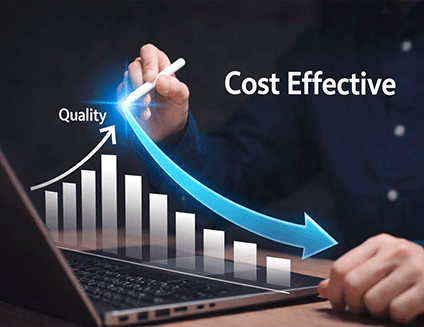
Automation reduces dispatch intervention and calls. Compliance by design cuts rework and repeat visits. OTT SaaS avoids heavy customisation and legacy platform overhead, with a lower long-term TCO than traditional FSM expansion.

📈
Experience & Revenue

Faster job completion accelerates revenue recognition. In-field upsell at the point of service supports growth. Real-time communications, accurate ETAs, and proactive delay alerts improve satisfaction and reduce churn.

The Compounding OPEX Bleed

New initiatives overlapping plans adding to labor expenses

Most vendors solve one. You have both.
For fiber overbuilders managing a post-merger integration, field coordination is not one challenge. It is two challenges running at the same time and amplifying each other.

01

🧩 Four Workforce types. Zero unified view.

  • Legacy Env A technicians in one system, Env B technicians in another
  • Fiber build crews outside both legacy systems
  • Subcontractors with no shared visibility or compliance tracking

📌 Impact: one workforce ecosystem, but no single operational layer to coordinate it.

02

⏱️ Limited Budget with Competing Priorities

  • Integration SLA exposure starts on close day
  • BEAD milestones remain contractually binding
  • IT capacity is consumed by non-field priorities post-close

📌 Impact: both clocks need a response that does not depend on an 18-month roadmap.

03

⚙️ One workforce absorbs both pressures.

  • Integration service overruns pull capacity away from build activity
  • Untracked fiber crews create integration SLA slippage
  • Technician days extend as coordination overhead increases

📌 Impact: productivity drops because the same workforce is being stretched across two programmes without shared control.

04

📊 The board sees one report compiled from three systems, days late.

  • Multiple systems create multiple disconnected reports
  • Programme managers reconcile manually
  • Decisions get made on lagging data

📌 Impact: productivity loss stays invisible until it is already expensive.

Why the Cost Compounds

Two coordination failures do not cost twice as much. They cost each other.

🔗 Integration SLA cost + fiber delay cost

Both cost centers draw from the same field workforce.

  • Integration service overruns consume build capacity
  • Build coordination failures create service slippage
  • Same people, same day, two programmes, no shared layer

🎯 Programme commitments at risk

Both merger synergy targets and BEAD funding draws depend on field coordination that does not yet exist.

  • A BEAD milestone slip and a post-merger cost increase can show up in the same board review
  • One coordination failure exposes two executive-level commitments

👷 Technician productivity risk

Extended technician days are a coordination failure, not a workforce problem.

  • Two programmes pull from one workforce without one dispatch layer
  • Technicians absorb the chaos through reactive reassignment and overtime
  • Attrition risk rises at the worst possible point in the programme
StraViso does not solve merger integration and fiber build as two separate projects. It closes both coordination gaps with one operational layer across all four workforce environments.

How StraViso Works

One coordination layer. Four workforce environments.

🔌
Connect all stacks API connection to both legacy environments and fiber build systems
👥
Unify workforce All four crew types visible in one real-time layer
🤖
AI routing Service and build jobs dispatched from one queue
📱
Field execution Guided mobile workflows for service techs and build crews
🏁
Milestone tracking SLA and BEAD milestones updated automatically
📋
One board report Integration and build velocity visible live, not compiled late

Field Cloud

One mobile interface for service technicians and fiber build crews

  • Single app across legacy Env A, Env B, and fiber build crews
  • AI-guided technician context before arrival
  • Job Auto-Status via geofencing removes manual status updates
  • Permit gate checks before crew departure
  • Completion and compliance documents captured automatically

Dynamic Dispatch Management

One dispatch view across integration service ops and the fiber build programme

  • Unified queue across service and build operations
  • Cross-workforce routing when capacity shifts
  • Integration SLA risk and BEAD milestone risk flagged in the same dashboard
  • Board reporting auto-generated from live field data

Security and Data Posture

Enterprise-grade security and compliance built for trust and resilience

Strong security and data posture with SOC 2 Type II compliance, GDPR-ready processes, and EU data residency options. Ensures data protection through AES-256 encryption, MFA/MDM support, and regular quarterly penetration testing.

  • SOC 2 Type II compliant
  • EU data residency available
  • GDPR Article 28 ready
  • AES-256 encryption
  • MFA / MDM supported
  • Quarterly pen testing

Compliance by Design

Field productivity and compliance are the same problem. Both are solved in the same layer.

Compliance failures create productivity loss by generating rework, repeat visits, and audit exposure. StraViso enforces compliance at the point of execution, not after the fact.

  • 🛡️ AI-enforced contract compliance — policy-aware assignments and process guidance
  • 📍 Immutable audit trails — time-stamped, geo-tagged evidence for every field event
  • 📡 Geo-fence constraints — prevent off-site completion and reporting abuse
  • 📸 Photo and document AI — enforce evidence capture automatically

Over-the-Top (OTT) Architecture

⚡ Coexistence over replacement. Field productivity without IT disruption.

Field Cloud AI operates as a decoupled SaaS layer above your existing enterprise stack. WFM, CRM, OSS/BSS, and network systems remain systems of record while StraViso enriches jobs, automates execution, and enforces real-time compliance above them.

🏗️ Architecture layers

  • ☁️ StraViso OTT Cloud — Field, Dispatch, Operations, Engage, Quantum
  • 🔌 API Integration Layer — APIGEE, MuleSoft, REST APIs, pre-built connectors
  • 🏢 Existing Enterprise Stack — WFM, CRM, billing, service delivery, HR, network

✅ Principles

  • 🚫 No rip-and-replace
  • 🧩 Low-code / no-code workflows
  • 🌐 Multi-platform support
  • 📶 High availability and offline capability

Competitive Advantage

Field Cloud AI vs. Oracle Fusion

Traditional FSM platforms take 12–24 months, require deep IT dependency, and introduce lock-in. StraViso deploys as an OTT layer with field productivity impact in months, not years.

🔑 Key Differences

Deployment timeline: StraViso faster to impact and full deployment
🔧
IT stack impact: Zero disruption through API-first OTT architecture
💰
3-year TCO: Lower than traditional FSM expansion
🤖
AI capability: Native field-operations intelligence, not bolted-on modules
📡
Multi-play support: Pre-built across wireless, wireline, satellite, and fiber
Compliance: Built in, not configured later
🎯
Risk model: Prove-then-scale with low lock-in
StraViso is not a replacement programme. It is the over-the-top (OTT) orchestration layer that improves field productivity while legacy systems stay in place.
20–35%
In-job efficiency improvement
📞
15–40%
Fewer dispatch calls
📅
60 days
To operational impact
📈
9 months
To full deployment path
🔧
4–5 to 6–7
Jobs per tech per day target shift

Purpose-built to Address the Specific Needs of All

VP Field Operations

Needs one live operational view, lower coordination drag, and higher output per technician.

CTO / CIO

Needs coexistence with the current stack, faster time to value, and lower integration risk.

CFO

Needs productivity gains that show up in TCO, cost efficiency, and service performance.

CEO / COO

Needs field productivity to become a proof point for integration success, not an ongoing liability.

Frequently Asked Questions

We don't have budget for a new platform right now. +

StraViso is not a new platform purchase. It is an OTT layer that sits above your existing systems. The 3-week discovery quantifies ROI before any commitment. Benefits realized within 60 days often offset the investment within nine months.

We're in the middle of a transformation. We can't add another initiative. +

That is exactly why StraViso exists. We deploy alongside your transformation, not inside it. Zero stack disruption. No IT bandwidth required beyond week-one scoping. Your transformation continues uninterrupted while field productivity improves immediately.

We have too much invested in our legacy dispatch system. +

StraViso connects to your legacy systems via 100+ prebuilt connector libraries. We do not replace them. If you pause continuous investment in legacy for six months, you can be live on StraViso and generating savings that offset legacy maintenance costs.

How much effort does this require from our side? +

Engineering involvement is limited to scoping in week one. After that, StraViso handles deployment, integration, and technician onboarding. A 50–100 technician pilot runs with weekly KPI tracking and minimal internal overhead.

Are you cloud native? +

Yes. SOC 2 Type II certified. AES-256 encryption at rest. TLS 1.2+ in transit. MFA/MDM support. Quarterly pen testing. EU data residency available.

What is your largest implementation? +

StraViso has scaled to 26,000–30,000 technicians in production. Reference customers and case studies available on request.

What is your typical time to market? +

Pilot in 60 days. Full production rollout in 6 months. ROI within 9 months.

What happens after FSM consolidation completes? +

StraViso continues above the unified stack as a permanent AI orchestration and productivity layer.

Field productivity is being capped by a coordination gap.

Book a field ops assessment to see where output is being lost across merger integration and fiber build operations — and where StraViso can improve throughput fastest.

Book a Field Ops Assessment Talk to the Team
AskLumen