
The Revenue You’re Already
Losing - Captured Before It Walks Out the Door.

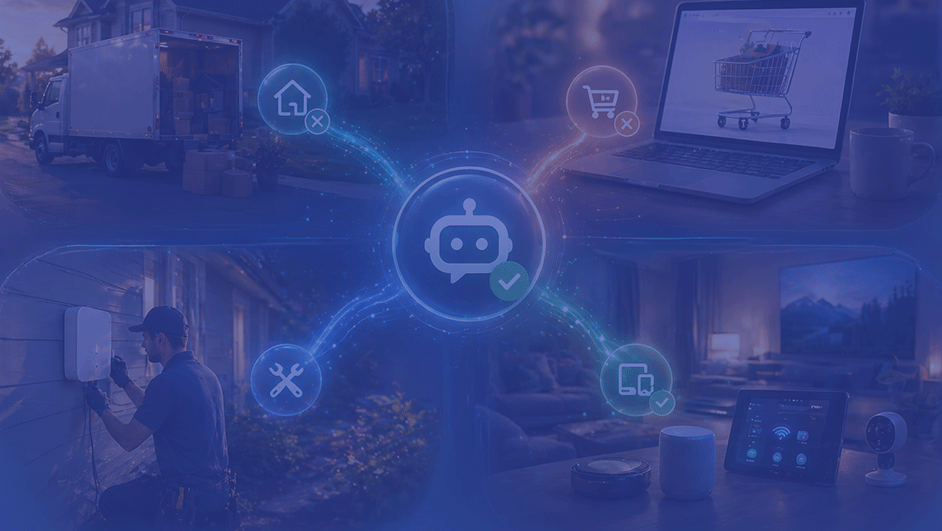
Out-of-network moves. Abandoned carts. Post-install attach. Connected-device bundles. Four moments where traditional systems leak revenue - and where StraViso Agentic AI closes the loop, in the same chat thread, with no human on the call.

$150-$350
Telecom CAC per acquired customer - every leaver costs you twice
70.19%
Average ecommerce cart abandonment rate - telecom buy-flows are no exception
7X
Multiplier - acquisition cost vs. cost of saving an existing subscriber
47%
Of cart abandonment is caused by surprise costs at checkout - recoverable in chat

Every Carrier Loses Revenue at the Same Four Moments.
StraViso Agentic AI Captures All Four.

Traditional systems were built to process orders , not to catch the moment a customer hesitates, moves out of footprint, or walks away mid-cart. StraViso’s Agentic AI intercepts those moments - in the same chat thread, with no human handoff - and turns them into booked revenue, retained subscribers, and ARPU lift .
Below are the four moments. Same Ops Cloud. Same orchestrator. Built once, deployed across all four.

1 Out-of-Network Save

No Fiber? No Problem. Still Your Customer.

When fiber can’t reach the new address, the traditional mover flow dead-ends and the subscriber is gone. StraViso pivots in the same chat thread - substituting a fixed-wireless offer before the customer ever sees a competitor’s site.
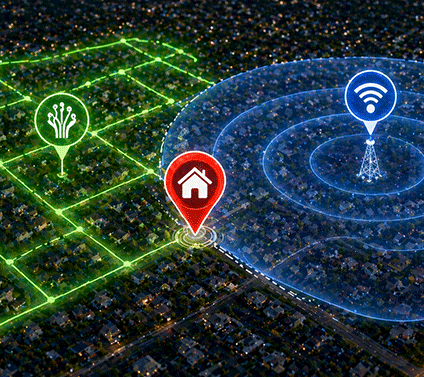
  • Ops Cloud detects the out-of-network result and flips the offer mid-conversation
  • Substitution offer: 6 months of fixed-wireless free on a 2-year contract
  • Propensity to convert is high because the customer is still in your funnel
  • No new build, no new vendor - same stack as the rest of the platform
How many movers did you lose to out-of-footprint last quarter?
Out-of-Network Save illustration
2 Abandoned-Cart Recovery

Abandoned Carts Are Just Orders Waiting for an AI Agent to Finish Them.

With 70% of carts abandoned industry-wide , the typical response - an outbound agent call hours later - gets ignored as spam. StraViso reaches the shopper in chat while intent is still warm and completes the order end-to-end.
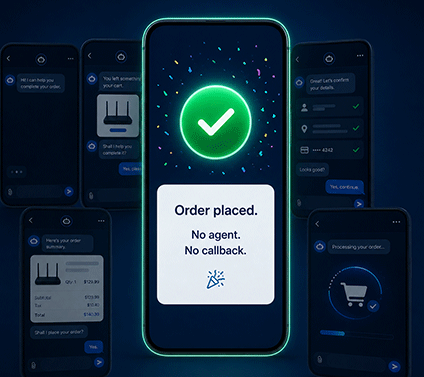
  • StraViso Agentic AI nudges in chat: “We see you have an active order - anything I can help with?”
  • NLP parses the reply, surfaces the right plan catalog for that address
  • 3 visual options sent to the customer’s phone, consent captured in-thread
  • Order completes inside a billing-system VM - no human, no callback, end to end
How much revenue is sitting in your abandoned-cart queue right now?
Abandoned-Cart Recovery illustration
3 Post-Install Attach

Stop Overselling on the Call. Unlock the Add-Ons on Install Day.

Reps are commissioned to oversell at the moment of fiber commit - customers are fed up, attach rates are low, and NPS drops. StraViso closes the chat, then re-opens it the day before install with an “You’ve unlocked 3 offers” sequence. No human, no commission-driven push.
  • Offer 1: Device insurance - covers the new CPE plus other home electronics
  • Offer 2: Mobility bundle - “$10 off your bill + free phone on us”
  • Offer 3: Add-a-line · plus AutoPay discount for another $5/mo off
  • StraViso Agentic AI runs the full sequence - consent-aware, no new credit check needed
What’s your post-install attach rate today? Let’s model a 15-point lift.
Post-Install Attach illustration
4 Fiber + Connected-Device Bundle

Stop Selling Speed. Start Selling the Connected Home.

Pure-speed fiber plans compete on price and lose. The carriers winning ARPU growth bundle fiber with connected-home devices and managed services - turning a commodity broadband line into a multi-product subscription. StraViso Agentic AI unlocks that bundle in the same chat thread that just sold the fiber.

  • 26-51% ARPU lift documented for fixed-mobile and converged service bundles vs. broadband-only plans (Simon-Kucher industry study)
  • 17% ARPU per upgrade and 5X upgrade velocity reported when broadband is sold as a lifestyle package, not a speed tier (Calix / Home Telecom case)
  • 25-35% lower churn on connected-home tiers (security, managed Wi-Fi, video) vs. broadband-only customers (industry research)
  • Bundles unlock at the moment of fiber commit - same Ops Cloud engine that powers Moments 1, 2, and 3, no new build
Show us your fiber-only base. We’ll model the converged-bundle ARPU lift.
Connected-Home Bundle illustration
One Stack, Four Outcomes

Build the Engine Once. Unlock Four Revenue Lines on the Same Wiring.

You don’t buy four products. You deploy one Agentic AI orchestrator and the four moments cascade off it - same connectors, same chat thread, same consent layer. Every additional moment ships faster than the last because the foundation is already live.

Ops Cloud Orchestrator

Codeless workflow engine that connects every system in the buy-flow - CRM, billing, provisioning, OSS/BSS - without IT taking the project over.

🔗

Integration Gateway

100+ prebuilt connectors plug into your existing stack. No rip-and-replace, no new vendor relationships, no parallel rollout.

Verify + Consent Layer

Government-grade identity verification plus consent-aware Agentic AI - “take me off your list” is handled gracefully in the same chat.

↓ ↓ ↓ ↓
MOMENT 01
Out-of-Network Save
Subscriber retained instead of churned
MOMENT 02
Cart Recovery
Order completed end-to-end, no callback
MOMENT 03
Post-Install Attach
3 offers unlocked, ARPU lifted
MOMENT 04
Connected-Home Bundle
Up to 51% ARPU vs. broadband-only
What it Takes To Deliver Each Moment
Traditional IT-Led Build
StraViso Agentic AI
Time to first moment in production
10+ months
6 weeks
APIs to build and govern
~700 custom APIs
100+ prebuilt connectors
Separate components required
Data orchestrator + LLM chatbot + verify service + workflow engine
One Ops Cloud engine, end to end
Cost to deliver one moment
~20× the StraViso cost
1× - and the next moment is configuration, not another build
IT bandwidth required
Multi-quarter program with dedicated squads
Week-one scoping only
Reusability across the four moments
Each moment rebuilt from scratch
One stack, four moments - second & third deploy faster than the first

Built for the Execs Whose Bonus Moves on Subscribers, ARPU, and Conversion.

Each moment maps to a specific owner. The platform is one. The KPIs are theirs.

CRO

Out-of-network saves and post-install attach both move the subscriber-count and ARPU lines that tie directly to your bonus. Subscriber saves are a pure-revenue story your board already wants.

Moments 1 & 3

CMO & Digital Lead

Abandoned-cart recovery and device bundling sit on the conversion-rate line. Marketing self-funds it through the offer calendar - no IT roadmap fight required.

Moments 2 & 4

CFO

Telecom CAC averages $150-$350 per subscriber. Every save and every attach lifts CLV against that fixed cost - and shows up in the same quarter you book it.

All Four Moments

Frequently Asked Questions

We don’t have budget for a new platform right now.
You don’t need one. Each of the four moments is self-funded out of the line item it improves - marketing budget for cart recovery, retention budget for out-of-network saves, the offer calendar for attach and bundling. The cost delta against today’s human-routed flow pays for the build inside the first billing cycle.
We’re in the middle of a transformation. We can’t add another initiative.
That is exactly why StraViso exists. We deploy alongside your transformation, not inside it. Zero stack disruption. No IT bandwidth required beyond week-one scoping. Your roadmap continues uninterrupted while saves and attach start booking in the first chat thread.
We have too much invested in our legacy CRM, billing, and provisioning systems.
StraViso sits on top of your existing stack via 100+ prebuilt connector libraries - it does not replace them. Ops Cloud, Integration Gateway, and Verify plug into what you already own. No rip-and-replace, ever.
How much effort does this require from our side?
Engineering involvement is limited to scoping in week one. After that, StraViso handles design, deployment, and integration. Each moment goes from scope to production in six weeks with minimal internal overhead - and they all run on the same engine, so the second and third moments deploy faster than the first.
Why deploy four moments instead of just one?
Most carriers start with one - usually cart recovery or out-of-network saves, depending on which leak hurts more. The point is that all four run on the same Ops Cloud orchestrator. Once you’ve deployed one, the other three are configuration changes, not new builds. Deploying all four still costs less than the IT-led approach to deploying one.
Can we see a reference customer before signing?
Yes. Retired telecom executives who ran the orchestration program at a giant U.S. telecom will take your reference call directly. Ask us for the case study and we will arrange it.
Are you cloud native and enterprise secure?
Yes. SOC 2 Type II certified. AES-256 encryption at rest. TLS 1.2+ in transit. MFA/MDM support. Quarterly pen testing. EU data residency available.
What is your typical time to market?
Six weeks to production for the first moment. Subsequent moments deploy faster because the orchestrator, connectors, and consent layer are already live. The competing IT-led approach to a single moment takes 10+ months and roughly 20× the cost.
Stop Leaking. Start Booking.

Show Us Your Lost-Revenue Queue. We’ll Tell You What 10% Recovery Looks Like for Your Bonus Year.

In a 20-minute walkthrough, we will show you the live four-moment flow, the unit economics, and what a 6-week rollout on your brand would look like - starting with the moment that hurts your number most.

One stack. Four moments. Six weeks to the first booked save.